Exorcist
Manor.
My first major lesson in designing with other people, not only for myself.
On this three-person university project I led game design, coordinated ideas with programmers and another designer, and revised a broad concept into something the team could prototype.
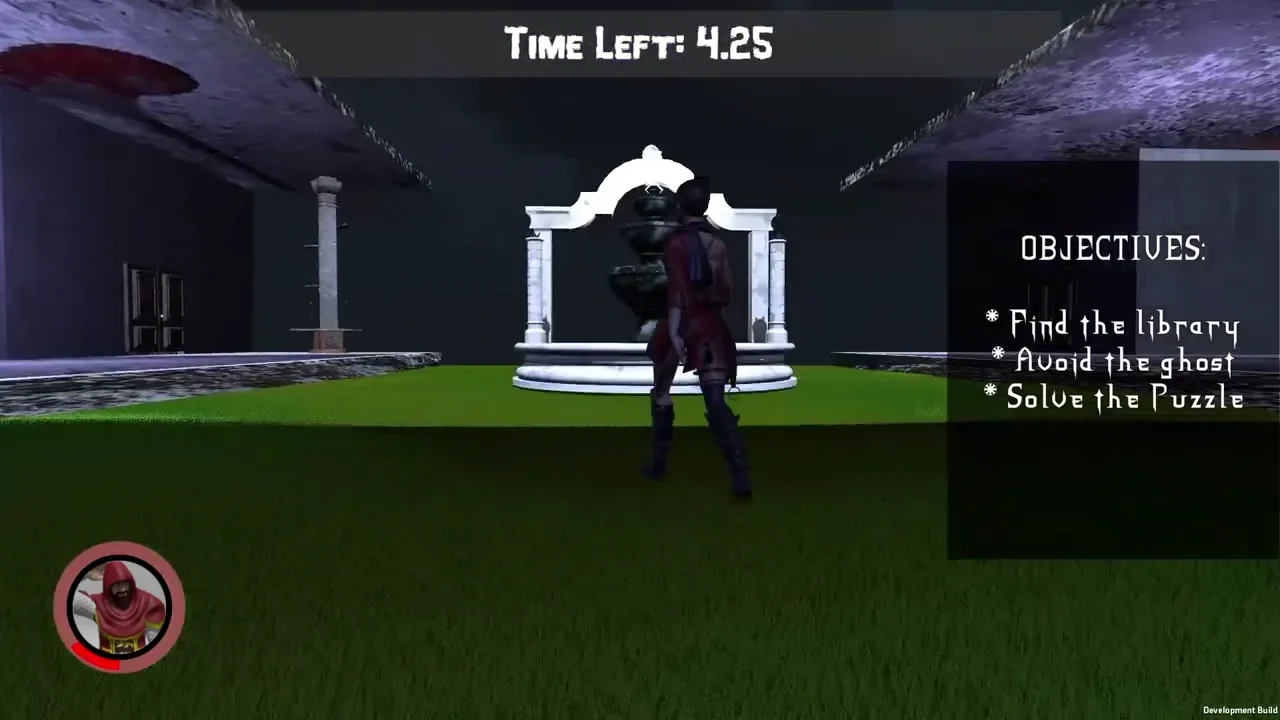 PLAYABLE PROTOTYPE / 2023
Designing with a team.
Working alongside a programmer and another designer meant more ideas could become playable. It also taught me that sharing the work only helps when everyone understands the direction, responsibilities and what the team can realistically build.
TEAM MEMBERS
The design had to work for the whole team.
I had to communicate the playable loop, puzzle plans and scope clearly enough for others to act on them, then adjust the design when implementation constraints or team changes demanded it.
Start with the player loop.
Escape-room-inspired puzzles, teamwork, and a shared source of pressure.
Map objectives, spaces and roles.
Outlined environments, character schools, enemies and the order players would encounter systems.
Check feasibility with the programmer.
Adjusted objectives and abilities based on what the team could realistically implement.
Reduce scope without losing the core.
Retained the cooperative premise while cutting back on what the short prototype could demonstrate.
Tension shared between players.
A noise detector and complementary character roles created a basis for coordinated play rather than three independent solo experiences.
Noise as a team-wide threat.
Enemy actions and player decisions were intended to make noise another resource players needed to manage. The visible meter concept connects environmental danger to cooperation.
EARLY WORKING PROTOTYPECharacter schools
Clairvoyance, Devotee and Unaligned were designed to contribute different abilities to the team's escape and exorcism objectives.
Enemy pressure
Kravens and Hollows were designed to create different responses: harassment, noise and dangerous guarded spaces.
The prototype in motion.
The video shows a shared environment, objectives and object interaction. The recording does not establish every planned cooperative puzzle rule.
Make the house feel inhabited.
Environmental clues, character backstories and enemy behaviour were designed to support the fiction of a haunted mansion rather than relying entirely on exposition.
Scope is a form of collaboration.
When the team changed and implementation time became constrained, revising the design was more important than defending every original idea.
WATCH THE STUDENT PROTOTYPE ↗